
eCommerce, also known as electronic commerce or Online Stores, is a business model that involves transactions taking place over the internet. These platforms enable businesses to sell goods and services online rather than through physical locations. This model has significantly transformed modern marketplaces.
Physical stores face geographical constraints, but online commerce removes these limitations. The internet has democratized access to broader markets, particularly benefiting small businesses worldwide.
The benefits of an ecommerce store go well beyond simply having a place to list products online. Whether you sell through a major marketplace like Amazon, run your own branded online store, or use a dropshipping model to avoid holding inventory at all, ecommerce gives small businesses access to customers, sales channels, and revenue models that were once only available to much larger retailers.
This guide breaks down the main ways businesses benefit from ecommerce today: selling through established third-party marketplaces, reducing inventory costs with dropshipping, owning a dedicated ecommerce website, selling digital products, and building recurring revenue through memberships and subscriptions.
Third-Party Marketplaces
Selling on Amazon and eBay
Amazon and eBay draw millions of active buyers to their marketplaces every month. Leveraging these platforms allows rapid market expansion, since sellers benefit from an audience they didn’t have to build themselves. Once customers arrive through these channels, there’s potential for repeat business and brand promotion — a positive first purchase experience often turns into a returning customer who searches for your brand by name next time.
Decreasing the Cost of Inventory Management
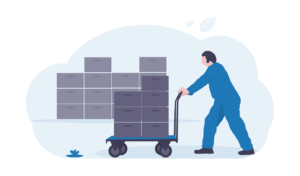
Dropshipping is an eCommerce business model where you can sell physical products online without having to deal with an inventory.
How dropshipping works:
- Customer places order on eCommerce store
- Order and customer details forwarded to dropship supplier (automatically or manually)
- Dropship supplier packages and ships directly to customer in retailer’s name
This model requires payment only for shipped items, eliminating large upfront inventory costs. For a new or small business, that removes one of the biggest barriers to selling physical products: the need to buy, store, and manage stock before making a single sale.
Third-party marketplace infrastructure presents trade-offs, though. They want the buyer to focus on the products, not the sellers. Platforms like Amazon and eBay restrict branding capabilities and control which items sellers can offer, which means a business relying entirely on marketplaces never fully owns its customer relationships — the platform sits between the seller and the buyer at every step.
Own Your eCommerce Website
Online stores operate 24/7, removing geographical restrictions. Key advantages include increased search engine visibility and higher local SEO rankings, since a dedicated website — unlike a marketplace listing — can be optimized, linked to, and found directly through search. Store owners gain complete control over product quantity and variants, accommodating businesses of any size, along with full ownership of branding, pricing, and the customer data a marketplace would otherwise keep to itself.
Digital Content
Modern internet technology enables selling digital goods—music, videos, books, courses, templates, and software—directly to customers. This approach creates unlimited inventory capacity while reducing employee expenses and increasing profit margins, since a digital product can be sold to unlimited customers simultaneously without ever running out of stock or needing to be shipped.
Online Memberships and Product Subscriptions

Recurring subscription models offer flexibility for monthly or annual product delivery. These systems manage sales directly through your website, eliminating middleman involvement, and — just as importantly — they turn one-time buyers into recurring revenue, which makes future income far more predictable than relying entirely on new, one-off sales each month.
Choosing the Right Ecommerce Approach for Your Business
There’s no one-size-fits-all answer here — the right mix depends on your budget, your product type, and how much control over branding and customer data actually matters to your business right now. Most successful small businesses don’t pick just one of these approaches — they combine them over time as their needs change:
- Start on a marketplace like Amazon or eBay to reach buyers immediately, without building an audience from scratch.
- Test products with dropshipping before committing to inventory, to validate demand at low risk.
- Build your own ecommerce website once you have a customer base worth owning directly, rather than renting through a third party indefinitely.
- Add digital products or subscriptions as a way to diversify revenue beyond one-time physical product sales.
None of these approaches are mutually exclusive — a business can sell physical products on Amazon, offer a digital course on its own website, and run a monthly subscription box all at the same time, each reaching a slightly different type of customer.
Conclusion
The benefits of an ecommerce store extend well beyond simply “selling online.” Third-party marketplaces offer instant access to a massive built-in audience, dropshipping removes the upfront cost of inventory, and a dedicated ecommerce website gives a business full ownership over its branding, customer data, and search visibility. Digital products and subscriptions add further flexibility, turning a single sale into an unlimited-inventory product or a source of predictable, recurring revenue.
There’s no single correct starting point — a brand-new business might begin on a marketplace to validate demand, while an established one might already be ready to invest in its own branded storefront. What matters is recognizing that ecommerce isn’t one strategy, but a set of complementary tools, and that a small business willing to combine them has more ways to reach customers and grow revenue than at almost any point before the internet made all of this possible.