

The Open Systems Interconnection (OSI) or OSI Model was invented as a representation to standardize communication between two computers. This networking model divides the networking process into 7 layers. Above all, these standards serve as a guide that helps vendors and developers create devices that interoperate with each other regardless of the brand.
All these 7 layers work collaboratively to transmit the data from one person to another across the globe. Nowadays, it is primarily used as a teaching tool for network architecture. This is an important part of CompTIA network+ certification.
If you’re new to networking, the OSI model is one of the first concepts you’ll run into — and for good reason. It gives you a shared vocabulary for talking about how data actually moves across a network, from the raw electrical signals on a cable all the way up to the app on your screen. Troubleshooting a connection problem, studying for a certification exam, or simply understanding what a “layer 3 switch” is all become far easier once you know the 7 layers of the OSI model and what each one is responsible for. This guide breaks down every layer of the OSI model in order, with real-world examples and protocols for each, so you walk away with a clear mental map of how networked communication actually works.
What Are the Seven Layers of the OSI Model?
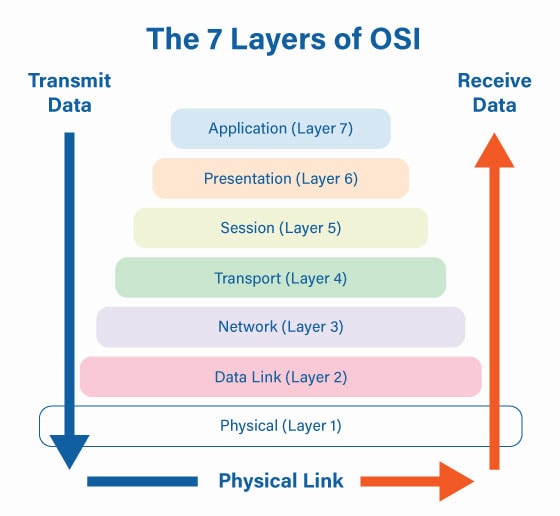
This OSI model can be seen as a common language for the computer networking framework. Each of the 7 layers of the OSI model contributes to the communication with the adjacent layers.
This seven-layer model is typically represented from top to bottom. These are the 7 Layers of the OSI Model:
Layer 1: Physical Layer
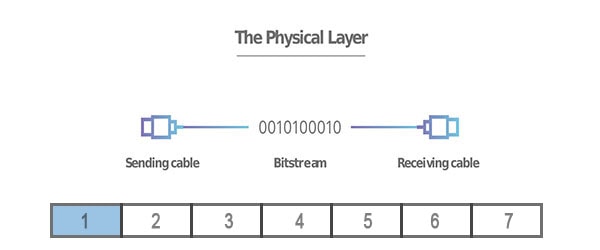
At Layer 1, the Physical layer carries raw bits over a physical medium. Examples include Ethernet cables, connectors, network interface hardware, hubs, repeaters, and wireless radio signals.
At the Physical layer, it’s important to know that data should be supported by the physical connection of your device. Layer 1 includes all the physical structure of the network:
- Physical Structure
- Coax
- Fiber
- Wireless
- Network Hubs
- Repeaters
Layer 2: Datalink Layer
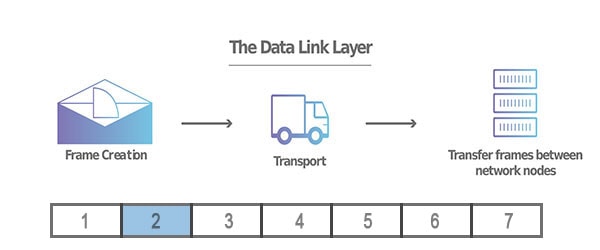
The Data link layer or layer 2 of the OSI model manages the physical addressing system such as MAC addresses. The data link layer handles data transfer between two devices on the SAME network.
The Data Link layer encapsulates network-layer packets into frames for delivery across a local link. It can provide local addressing, framing, and error detection, depending on the link technology.
The data link layer has two sublayers: the LLC sublayer or logical link control and the MAC sublayer or media access control. In conclusion, layer 2 defines the format of data on the network by managing the physical addressing system of the network:
- Encapsulation
- Frame synchronization
- Logical link control (Error & Flow control)
- Media access control (MAC, Network Switch, Physical addressing, QoS, VLANs)
Layer 3: Network Layer
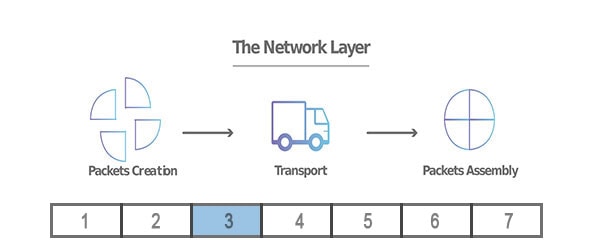
The network layer or layer 3 of the OSI model is responsible for facilitating data transfer between two different networks. A protocol that defines routing and addressing is considered to be a network layer, or Layer 3.
The network layer carries transport-layer segments in packets and provides logical addressing and routing between networks. Routers and Layer 3 switches commonly perform these forwarding functions.
In addition, the network layer devices also are in charge of determining the best physical path for the data to reach its destination; this is known as routing.
The protocols used in Layer 3 include:
- Internet Protocols IPv4/v6
- Internet Control Message Protocol (ICMP)
- Distance Vector Multicast Routing Protocol (DVMRP)
- Internet Group Management Protocol (IGMP)
- Address Resolution Protocol (ARP)
- Internet Protocol Security (IPsec)
- Routing Information Protocol (RIP)
Layer 4: Transport Layer
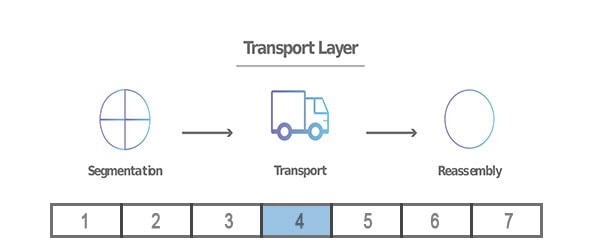
The Transport layer supports end-to-end communication between applications. Examples include TCP and UDP. Depending on the protocol, this layer can provide flow control, reliability, ordering, or error detection.
The flow control defines the optimal speed of transmission. In other words, it assures that the receiving end device can handle the transmission. In addition, the transport layer ensures that the data received is complete.
Layer 4 works by taking the data from the session layer and dividing it up into smaller pieces called segments. This dividing process is completed before sending it to the network layer. Consequently, the transport layer on the receiving end of the message reassembles the divided segments.
Data at the Transport layer is commonly called a segment for TCP and a datagram for UDP.
Layer 5: Session Layer
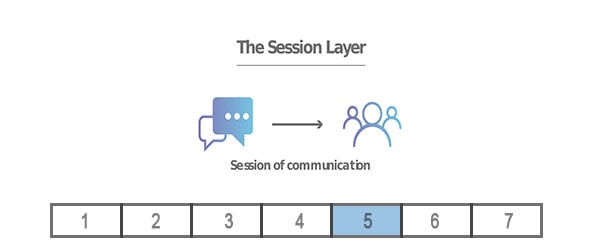
The session layer or Layer 5 of the OSI model is responsible for creating and closing the communication between the two devices. This is known as a Session. Layer 5 maintains the session open until the transfer completes subsequently closing afterward.
Its services include authentication and reconnection after an interruption. In addition, layer 5 synchronizes data transfer with checkpoints. To clarify, here is an example of layer 5.
Firstly, Let’s say that we are transferring a 100-megabyte file. As a result, the session layer sees the file and sets a checkpoint every 5 megabytes. This is very important during transferring failures. Because it allows the transmission to resume from the last checkpoint. Consequently, saving network processing power.
Layer 5 Session examples include NFS, NetBios names, RPC, SQL.
Layer 6: Presentation Layer
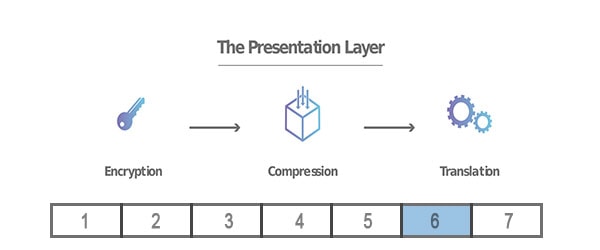
The presentation layer or layer 6 is in charge of translating or formatting the data for the application layer. In other words, the presentation layer makes the data presentable for layer 7.
Secondly, the presentation layer is the layer that handles the encryption and decryption of data for the application layer.
Finally, layer 6 is also responsible for the compression of data received from the application layer. This is done before delivering it to layer 5. Therefore, improving the speed and efficiency of communication during the data transferring process.
Layer 6 Presentation examples include encryption, ASCII, EBCDIC, TIFF, GIF, JPEG, MPEG, MIDI.
Layer 7: Application Layer
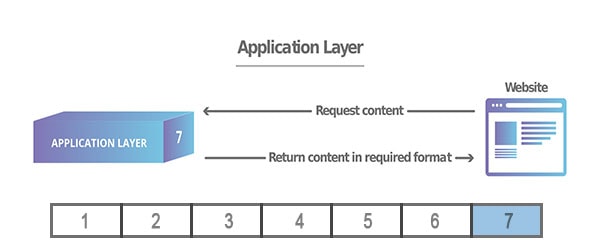
Layer 7 or the application layer is the layer that directly interacts with data from the user. This layer includes software applications like web browsers and email clients. Layer 7 Applications include web browsers and other internet-connected apps, such as Outlook and Skype.
To clarify, it should be made clear that client software applications are not part of the application layer. On the contrary, the application layer is responsible only for data protocols. Consequently, the software relies on this layer to present meaningful data to the user.
Application layer protocols include the Hypertext Transfer Protocol or HTTP and Simple Mail Transfer Protocol or SMTP.
The Bottom Line
In conclusion, the OSI reference model’s main purpose is to standardize how computers communicate with one another over a network. This seven-layer model is typically represented from top to bottom. In order from seven to one, the layers are as follows: application, presentation, session, transport, network, data link, and physical layer.
Even though modern networking is often explained in terms of the simpler, four-layer TCP/IP model, the OSI model remains the standard teaching and troubleshooting framework because it separates responsibilities so clearly. When a website won’t load, for example, working through the OSI model’s layers — is the cable connected (Layer 1)? Is the device getting an IP address (Layer 3)? Is the browser actually receiving data (Layer 7)? — gives you a systematic way to isolate exactly where the problem is happening, instead of guessing.
For beginner web designers and anyone studying for a networking certification like CompTIA Network+, memorizing the 7 layers of the OSI model is just the starting point. The real value comes from understanding what happens at each layer and how they depend on one another: physical hardware carries the signal, the data link layer gets it to the right device on the local network, the network layer routes it across networks, the transport layer makes sure it arrives intact, and the top three layers turn raw data into something a session, an application, and ultimately a user can actually understand. Keep this seven-layer breakdown as a reference, and network troubleshooting and terminology will make a lot more sense going forward.