
This article explains what web hosting is and the main types of hosting available. To make websites visible online, files and data must be stored on computers connected to the internet continuously. These powerful machines are called web servers. A web host is a company that maintains servers in data centers and provides software, security, and bandwidth services.
A hosting company provides the technology and services needed to store your web site’s files and make them available on the internet. The services utilize HTTP (Hypertext Transfer Protocol) to deliver web pages. Simply put, “Hosting is the home of your website.”
Hundreds of hosting companies offer varying prices and services. Packages are categorized by storage space needed and bandwidth consumption. Key considerations when selecting a hosting solution include budget, server speed, and security features.
This guide covers what web hosting actually is, how local development servers fit into building a website before it goes live, what cPanel does, how to choose between shared, VPS, and dedicated hosting, and what to budget for hosting and its most common add-ons.
What is Local Web Server
When building dynamic websites, content, images, and file structures must be stored on servers. It’s advisable to work on local servers before going live. Local development environments allow website creation using Apache, PHP, and MySQL databases, typically including PHPMyAdmin for database management.
Local server applications:
- XAMPP – Apache + MariaDB + PHP + Perl for Win, Mac, Linux
- WampServer – Apache + PHP + MySQL for Windows Only
- MAMP – Apache + PHP + MySQL + Python + Ruby + Perl for Win, Mac, Linux
- EasyPHP – PHP + Apache + MySQL + PHPAdmin + Python for Windows Only
Since websites differ, finding the best hosting company suited to your work is essential. Always check for hidden charges and feature completeness before signing contracts.
What is cPanel?
cPanel is a web dashboard used by most web hosting companies. It was designed to make it easier to manage your web hosting account using a simple graphical interface.
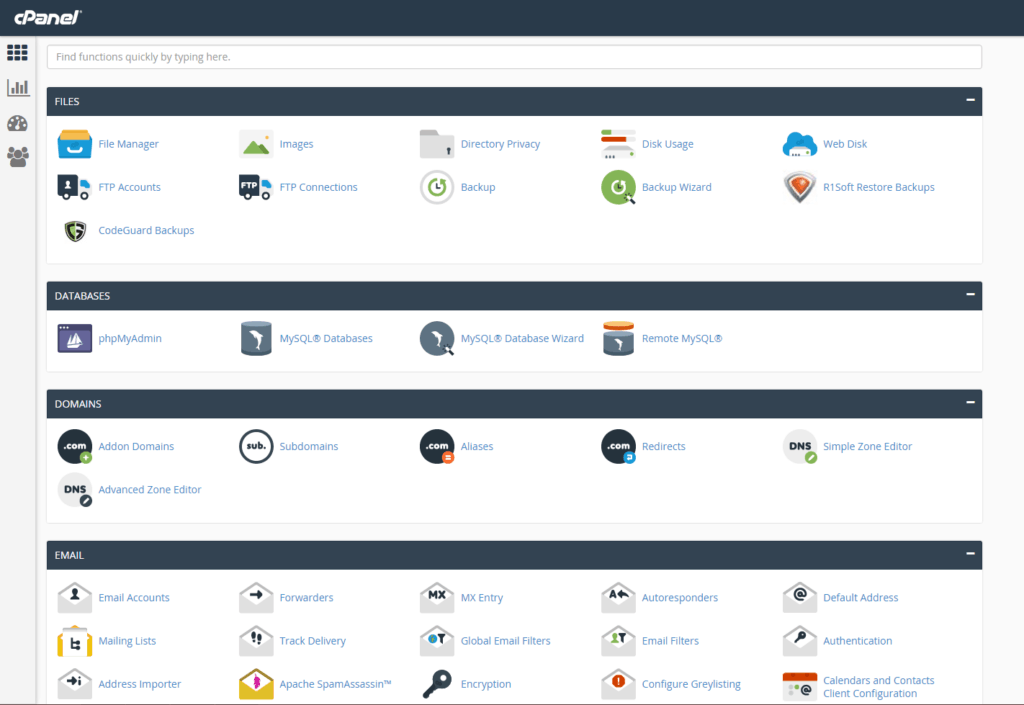
Common cPanel features:
- File Manager – Container for images and website files
- Add-on Domain – Manage additional domains
- Email – Create and manage webmail accounts
- MySQL – Create databases and users
- phpMyAdmin – Manage website databases
How to Choose a Web Hosting Provider
Understanding your website’s needs is crucial for selecting appropriate hosting. Services range from a few dollars a month to several thousand, so answering a few key questions up front helps narrow down the right fit:
- What type of website are you building? A simple portfolio site has very different hosting needs than a high-traffic online store.
- Do you need support for specific languages or versions (e.g., a particular PHP version required by your CMS or framework)?
- Does your website need special software, such as a specific database engine or a caching layer?
- How much bandwidth and storage space is needed? A media-heavy site with lots of images or video needs more of both than a text-focused blog.
- What is the hosting provider’s security and uptime reputation? Independent reviews and uptime-tracking reports are worth checking before committing to a contract.
What can I expect to pay for web hosting?
Costs depend on service type, bandwidth, and storage needs.
Shared Server: A shared hosting plan is the most inexpensive option offered by most hosting companies. Multiple users share one physical server with split operating and maintenance costs. Typical range: $3 to $10 per month.
Virtual Private Server (VPS): Still shared infrastructure but with reserved resources. The advantage of VPS is that no matter how much bandwidth other sites used, there is always bandwidth reserved for your site. Typical range: $20 to $50 monthly.
Dedicated server: A dedicated server is a server set aside entirely for you. All RAM, bandwidth, and disk storage are exclusively yours. Expect to pay over $100 per month.
Addons & Extra Services
SSL Certificates: Required to protect visitor privacy, especially for credit card information and online transactions. Nowadays a key component in Google’s ranking algorithm.
Backups: One of the most important elements to mitigate the risks of a disaster. Hosting providers offer regular backup services.
Email Service: Most providers include unlimited email account creation, though verification is recommended.

Check Before You Buy
Popular hosting companies to consider:
- iPage
- Dreamhost
- HostGator
- BlueHost
- JustHost
- SiteGround
- Inmotion Hosting
- WP Engine
Before signing up with any of these, compare renewal pricing (not just the discounted first-term rate), read recent customer reviews rather than only the provider’s own marketing page, and check what’s actually included — some providers bundle a free domain or SSL certificate for the first year, while others charge extra for both from day one.
Conclusion
Web hosting is the foundation every website depends on — the servers, bandwidth, and supporting services that make your files accessible to visitors anywhere in the world. Whether you’re comparing shared, VPS, or dedicated hosting, the right choice comes down to matching your website’s actual traffic, storage, and security needs to a plan that fits your budget, rather than defaulting to the cheapest or most expensive option available.
Take the time to test your site locally before it goes live, get comfortable with cPanel or whichever control panel your host provides, and don’t skip essentials like SSL certificates and regular backups — they’re inexpensive insurance against problems that are far more costly to fix after the fact. With the right hosting provider and plan in place, you can focus on building your website instead of worrying about whether it will stay online.