
Tag: Cybersecurity
Java4Shell: What It Is and How to Fix It
Java4Shell is a critical OpenJDK Base64 flaw that can crash or take over Java servers on AVX-512 CPUs. Learn who is affected, how to check, and how to fix it.
What Is a Cyber Attack? Types, Examples, and Prevention
A cyber attack is an attempt to steal, damage, or disrupt systems and data. Learn how attacks work, the most common types, real examples, and prevention.
Have I Been Pwned? Check for Data Breaches
How to use Have I Been Pwned to see if your email or password was in a data breach, what the results mean, and what to do next to secure your accounts.
What Is a Passkey? Understanding Passwordless Authentication
Learn what a passkey is, how passwordless login works, why passkeys resist phishing, and how to start using them, including with Bitwarden.
What Is Cloudflare? Website Security and Performance Guide
Learn how Cloudflare's CDN, DNS, SSL, DDoS protection, and firewall make a site faster and safer, with a setup walkthrough and its free tools.
K-12 Data Privacy: Protecting Student Information in the Digital Age
A guide for K-12 technology departments: where student data lives, FERPA, COPPA, and CIPA, and a plan for app vetting, access control, backups, and incidents.
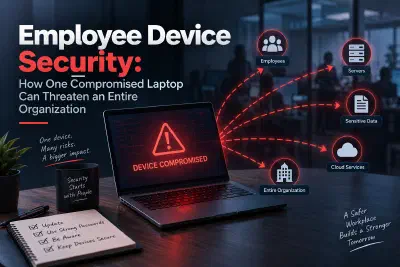
Employee Device Security: How One Laptop Can Compromise a Company
How one compromised employee laptop can lead to a company-wide breach, the stages of an attack, and the practical steps that keep devices and data safe.
Linux Distributions: A Beginner's Guide to Kali Linux
What Kali Linux is, its history, tools, system requirements, ways to run it safely, Kali vs Ubuntu, pros and cons, and who should (and shouldn't) use it.
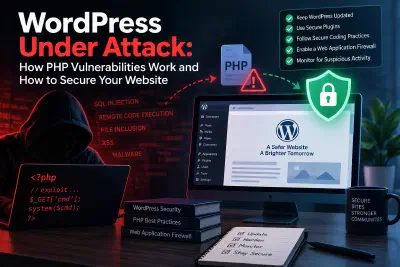
WordPress Under Attack: PHP Vulnerabilities and How to Stay Safe
How PHP vulnerabilities put WordPress sites at risk, what the October 2026 PHP2Shell flaws mean for site owners, and practical steps to secure your site.
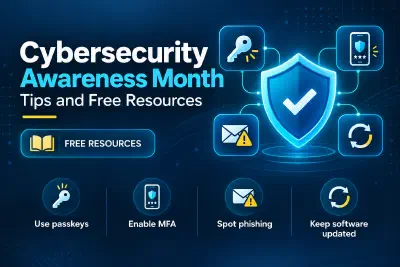
Cybersecurity Awareness Month: Themes, Tips, and Free Resources
What Cybersecurity Awareness Month is, the 2026 themes, the four easy steps everyone should take, tips for businesses, and free official resources.
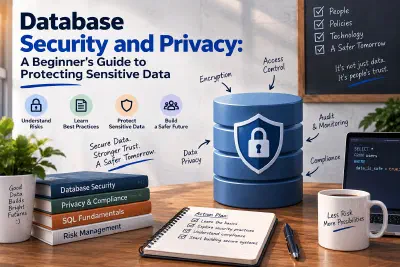
Database Security and Privacy: Protecting Sensitive Data
Learn how to secure a database: access control, encryption (and what data to encrypt), SQL injection defense, backups, auditing, and a practical checklist.
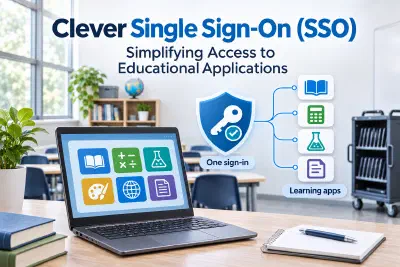
Clever Single Sign-On (SSO): Simplifying Access to Educational Applications
How Clever SSO works in K-12 schools: one login for every learning app, automatic SIS rostering, Clever Badges for young students, security, and setup tips.
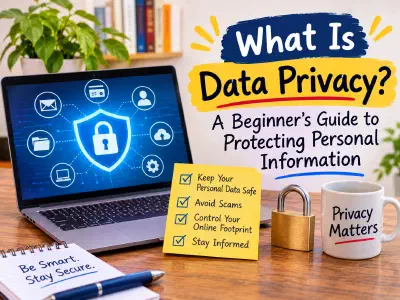
What Is Data Privacy? Protecting Personal Information
Learn what data privacy is, what counts as personal information, how companies collect it, and practical steps to protect your own data online.
SQL Injection: How It Works and How to Prevent It
Learn what SQL injection is, how attackers exploit it, and how to prevent it with parameterized queries and input validation.
The Importance of the .env File in Python Projects
Learn why .env files matter in Python projects — keeping API keys and secrets out of your code, with setup steps and best practices.
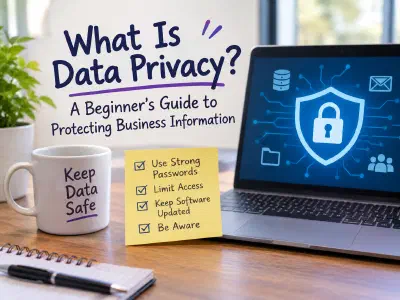
What Is Data Privacy? Protecting Business Information
Learn what data privacy means for a business, what data you must protect, the laws that apply, and a practical checklist for small organizations.
What Is Disaster Recovery? Protecting Data and Systems
What disaster recovery is, how it differs from backups, what RTO and RPO mean, the main strategies, and how to build and test a simple DR plan.

What Is Ransomware? How Attacks Work and How to Prevent Them
What ransomware is, how attacks happen, real examples like WannaCry and Colonial Pipeline, how to protect your home and business, and what to do if hit.

What Is Malware? Common Types and How to Stay Safe
A cybersecurity primer on malware types—viruses, worms, trojans, ransomware, spyware, and more—and how to protect yourself.

Two-Factor Authentication (2FA) Explained: Methods, Risks & Setup
2FA keeps attackers out even when they have your password. Learn how it works, why SMS codes are the weakest option, and how to set it up in minutes.
How to Set Up an SFTP Server on Linux
Step-by-step guide to setting up a secure SFTP server on Linux with OpenSSH, including chroot-jailed users, key-based authentication, and troubleshooting tips.
What Is SSH? A Beginner's Guide to Secure Remote Login with SSH Keys
Learn what SSH is, how it works, and how to set up passwordless login with SSH keys on Linux, macOS, and Windows, with hardening tips.
What Is a Zero-Day Vulnerability? How It Works, Risks, and Prevention
A zero-day vulnerability is a flaw attackers exploit before a fix exists. Learn how zero-day attacks work, real examples, detection, and prevention.

Bring Your Own Device (BYOD): Benefits, Risks, and Policies
Understand BYOD benefits and security risks, then learn which policies and controls help organizations manage employee-owned devices.
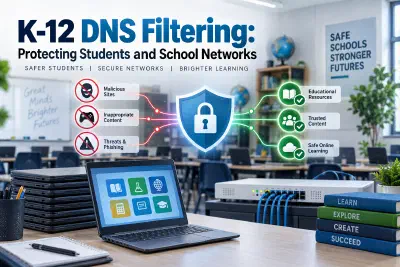
K-12 DNS Filtering: Protecting Students and School Networks
How K-12 schools use DNS filtering and content filtering to block malicious and inappropriate sites, support CIPA, and protect students on and off campus.

K-12 E-Waste Recycling: Managing and Disposing of School Technology
How K-12 schools can recycle old computers and Chromebooks responsibly: wipe student data, track assets, choose certified recyclers, and cut electronic waste.

Managing Chromebooks in K-12 Schools: An IT Guide
How K-12 IT teams manage Chromebooks: enrollment, Google Admin Console, organizational units, security policies, updates, repairs, and troubleshooting.
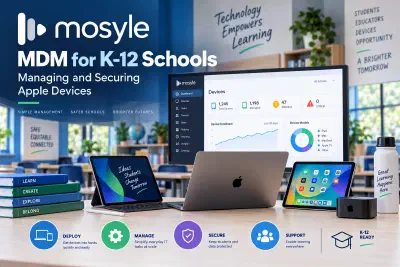
Mosyle MDM for K-12 Schools: Managing and Securing Apple Devices
How K-12 IT teams use Mosyle MDM to manage iPads and Macs: automated enrollment, security policies, app deployment, updates, and remote management.
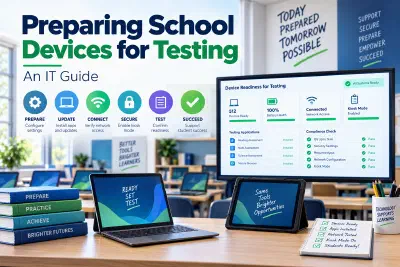
Preparing School Devices for Testing: An IT Guide
How school IT teams prepare Chromebooks and computers for CAASPP and ELPAC testing: updates, network capacity, secure browser setup, and troubleshooting.
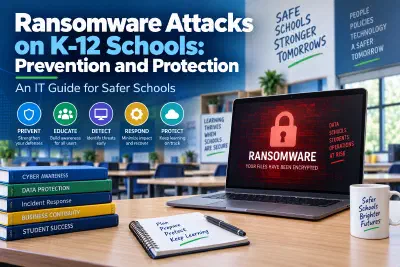
Ransomware Attacks on K-12 Schools: Prevention and Protection
How ransomware targets K-12 schools and how IT teams can protect student data and networks with backups, access controls, training, and a recovery plan.

Deception and Disruption: Honeypots, Honeynets, and Honeytokens
Part 9 of Cybersecurity Fundamentals: how honeypots, honeynets, honeyfiles, and honeytokens trap attackers and give early warning, with a runnable alert demo.

Physical Security Explained: Barriers, Cameras, Guards, and Sensors
Part 8 of Cybersecurity Fundamentals: how fences, vestibules, cameras, guards, badges, lighting, and sensors protect buildings and equipment, in layers.

Zero Trust Security Explained: Never Trust, Always Verify
Part 7 of Cybersecurity Fundamentals: what zero trust is, the control and data planes, policy engine and enforcement point, with a small decision demo.
Security Gap Analysis: How to Find and Close Security Gaps
Part 6 of Cybersecurity Fundamentals: what a security gap analysis is, the steps to run one, how to read a red-yellow-green report, with a scoring demo.

Authentication, Authorization, and Accounting (AAA) Explained
Part 5 of Cybersecurity Fundamentals: how authentication, authorization, and accounting (AAA) control access, with a VPN login example and a runnable demo.

Non-Repudiation Explained: Digital Signatures and Proof of Origin
Part 4 of Cybersecurity Fundamentals: what non-repudiation means, how hashes and digital signatures prove who sent data, with a hands-on signing demo.
The CIA Triad Explained: Confidentiality, Integrity, Availability
Part 3 of Cybersecurity Fundamentals: what the CIA triad is, how confidentiality, integrity, and availability work, with examples, a hash demo, and trade-offs.

Security Controls Explained: Categories, Types, and Examples
Part 2 of Cybersecurity Fundamentals: the four categories and six types of security controls, with examples, a classification table, and a real incident.

Cybersecurity Fundamentals: A Complete Beginner's Guide
Part 1 of Cybersecurity Fundamentals: the CIA triad, phishing, ransomware, security controls, encryption, and practical steps to stay safe.
Honeypot: A Proactive Deception Defense
What is a honeypot? Learn how honeypot decoy systems detect hackers, the different types, and how a simple honeypot field stops form spam.
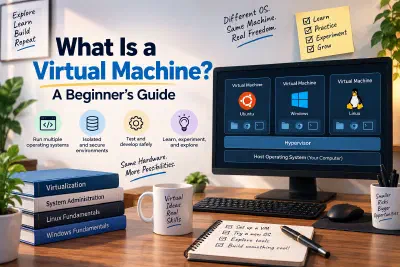
What Is a Virtual Machine (VM)? How It Works and Free Tools
A virtual machine is a computer running inside your computer. See how VMs and hypervisors work, why people use them, and the best free tools to start.

Safer Internet Day: Online Safety Tips & Guide
What is Safer Internet Day? Learn the biggest online risks, how to prevent cyberbullying, and practical tips to stay safe online.