
Tag: Python
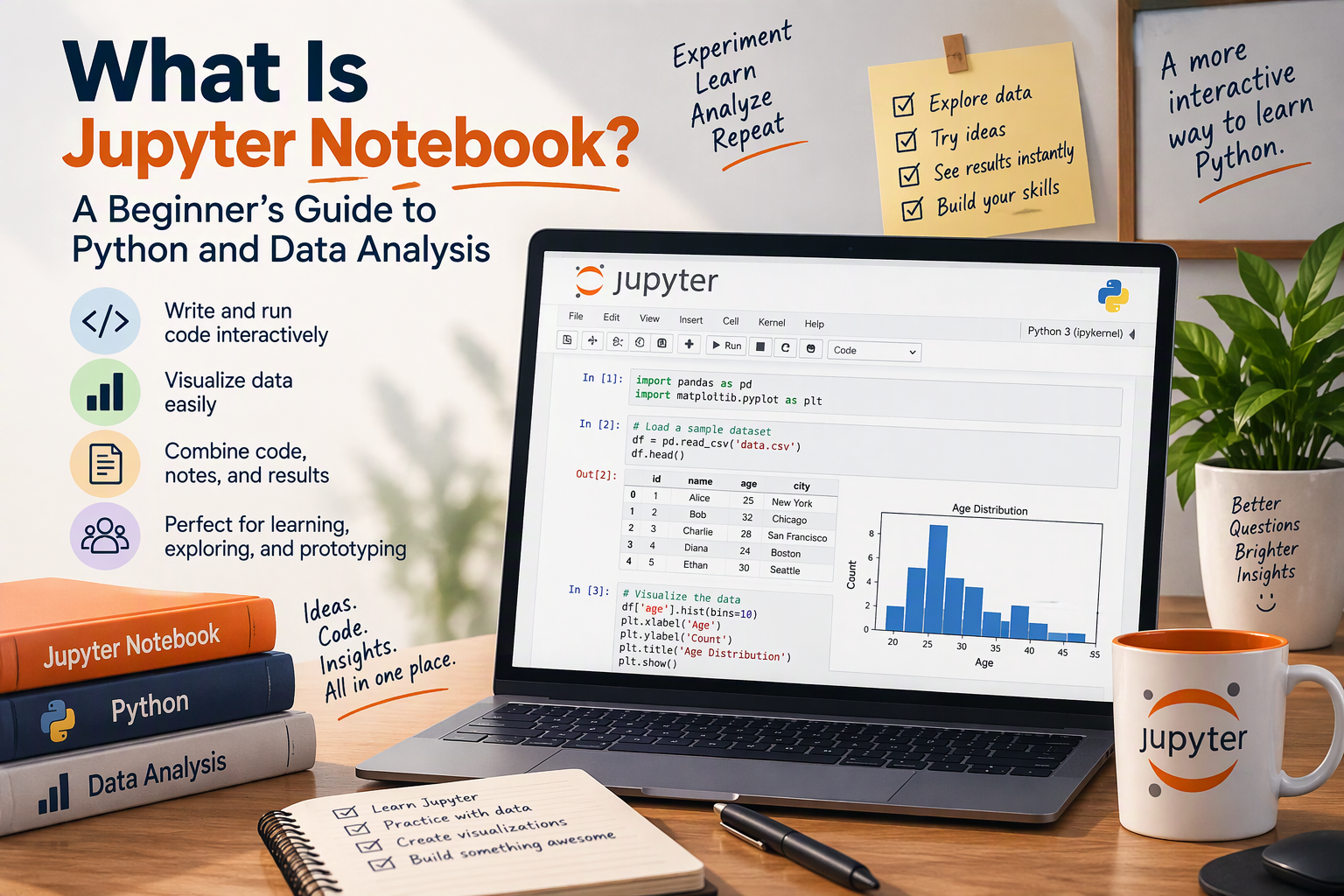
What Is Jupyter Notebook? A Beginner's Guide to Python and Data Analysis
Learn what Jupyter Notebook is, how to install it, and how to use cells, Markdown, keyboard shortcuts, and magic commands to explore data with Python and Pandas, plus best practices for clean, shareable notebooks.
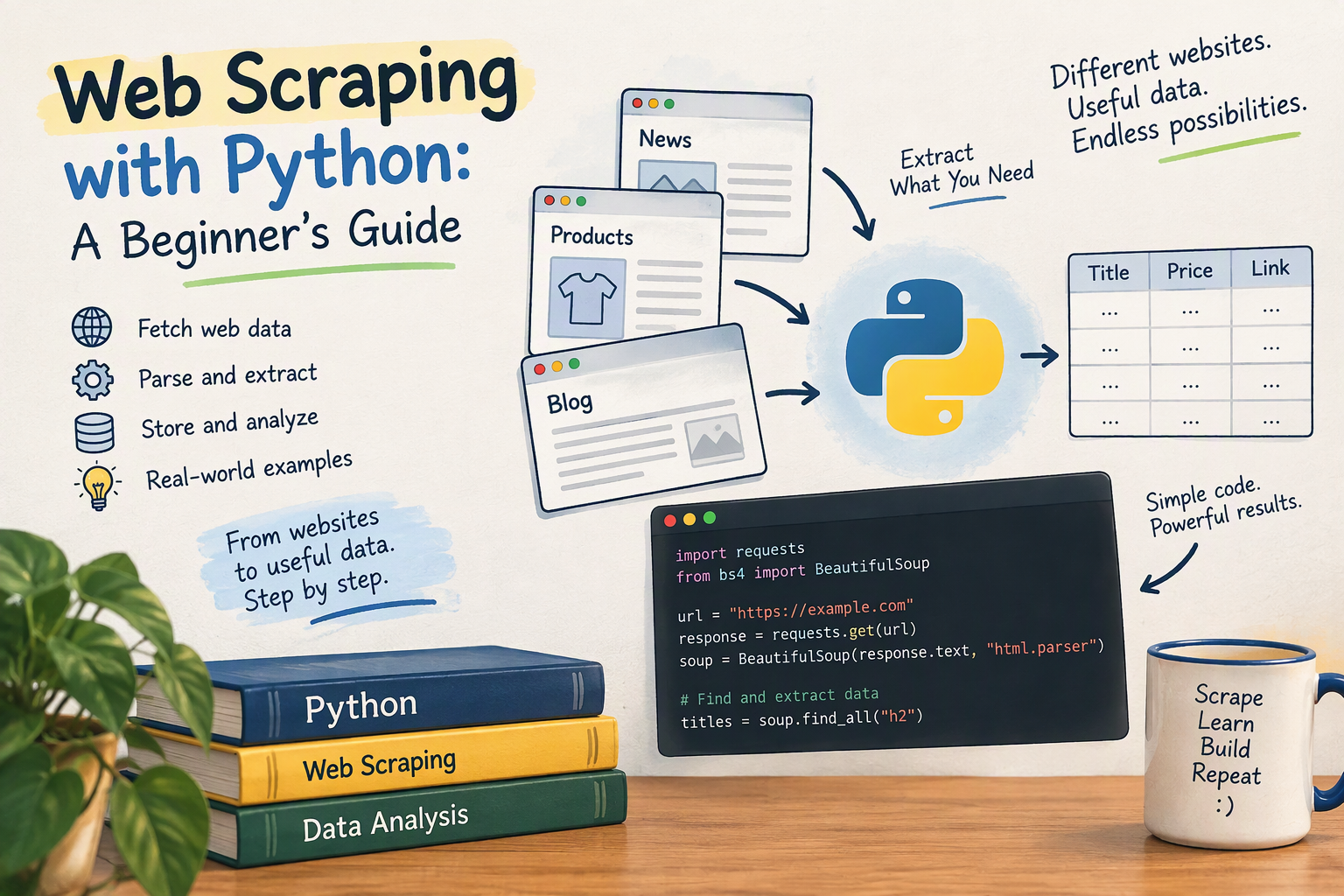
Web Scraping with Python: A Beginner's Guide
Learn how web scraping works and how to scrape a website with Python, Requests, and Beautiful Soup. Covers setup, finding data in HTML, saving to CSV, and scraping ethically.
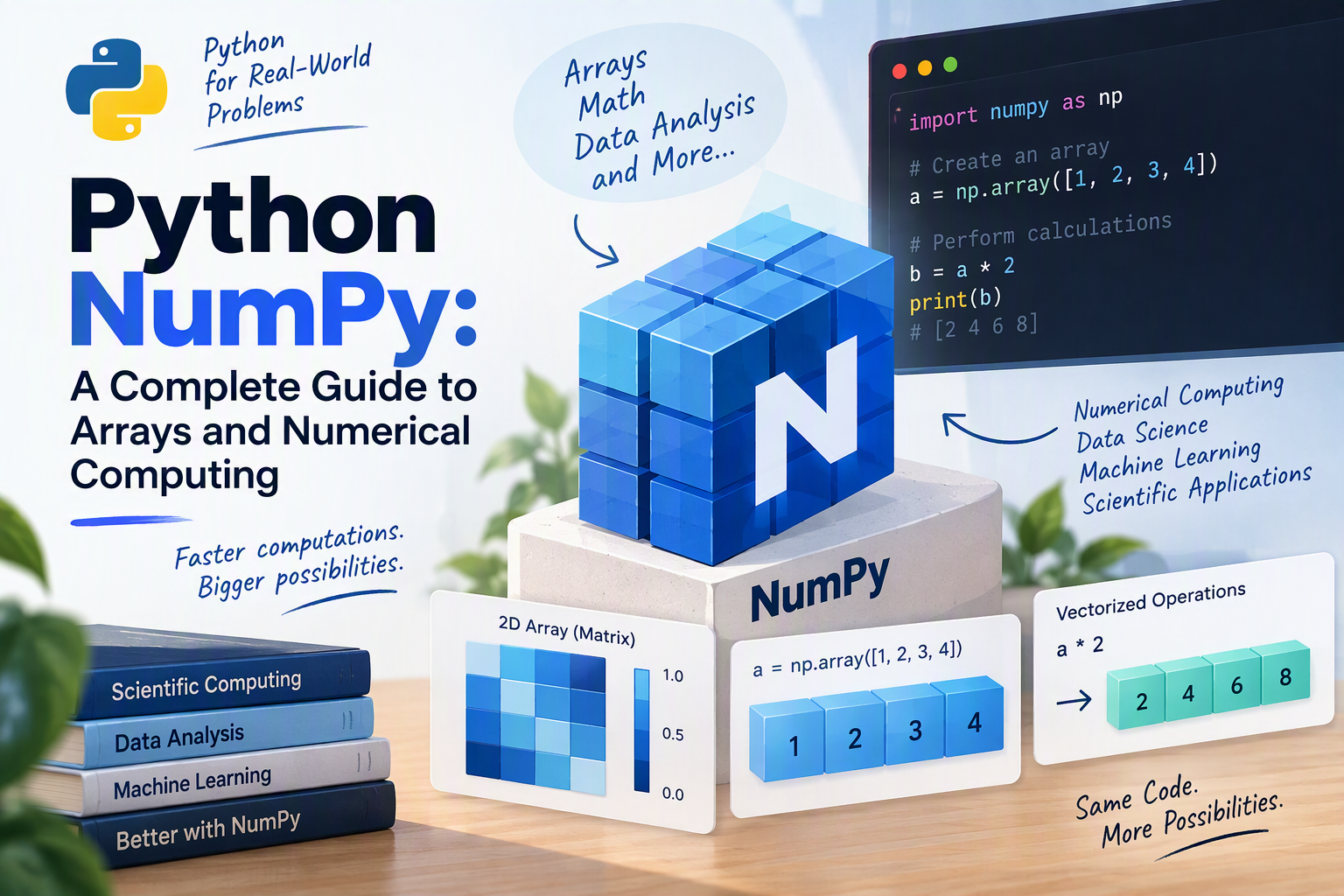
Python NumPy: A Complete Guide to Arrays and Numerical Computing
Learn NumPy from scratch: create arrays, index and slice them, filter with boolean masks, do fast vectorized math, understand axes and broadcasting, reshape data, avoid common pitfalls, and solve real problems — with real output for every example.
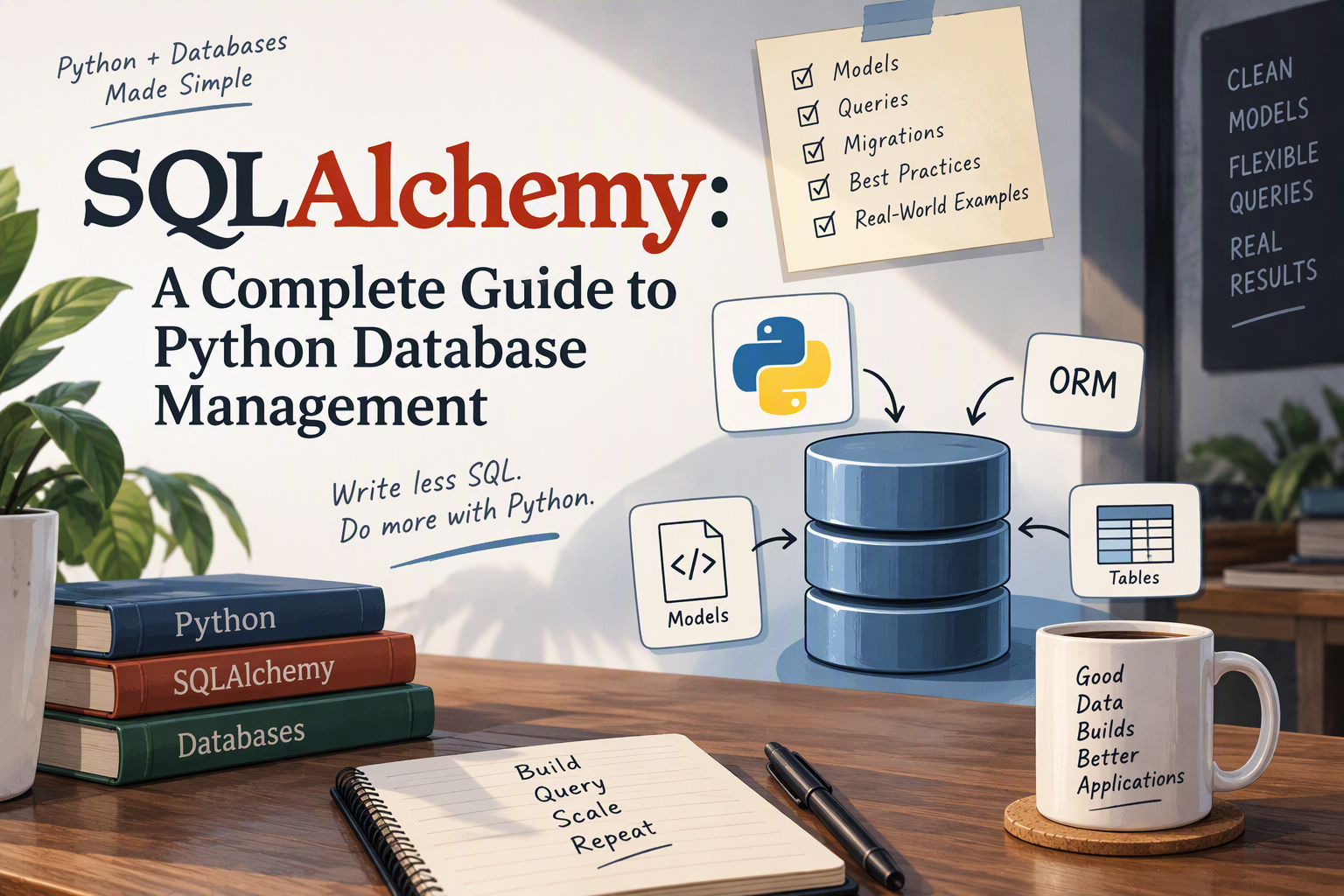
SQLAlchemy: A Complete Guide to Python Database Management
Learn SQLAlchemy 2.0 from scratch: connect to a database, define models, create, read, update, and delete records, work with relationships and joins, avoid the N+1 query problem, manage transactions, and handle schema changes with Alembic.
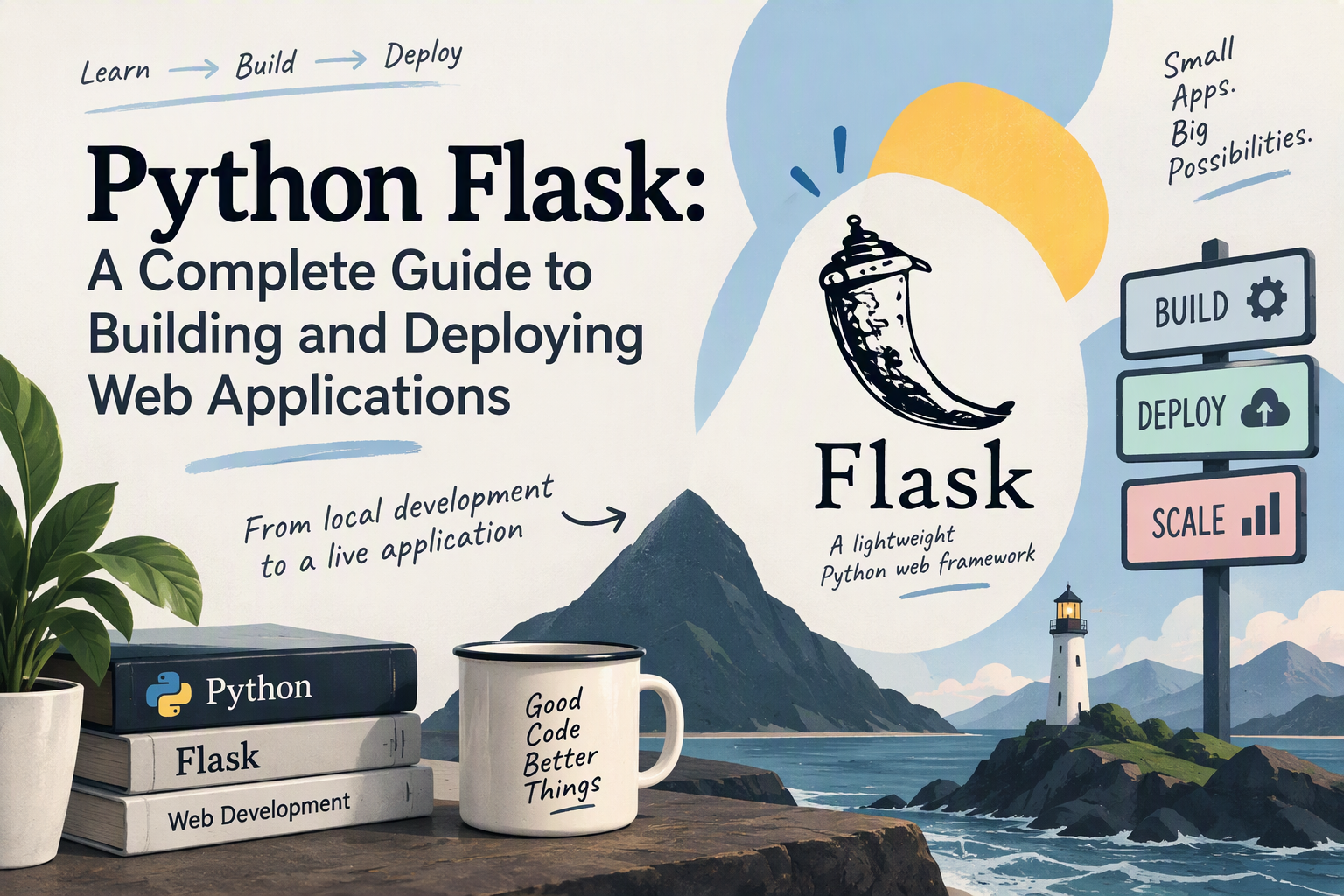
Python Flask: A Complete Guide to Building and Deploying Web Applications
Learn Python Flask from scratch: set up a project, build routes and templates, handle forms, add a database, create a JSON API, write tests, and deploy your app to production with Gunicorn, Nginx, or Docker.
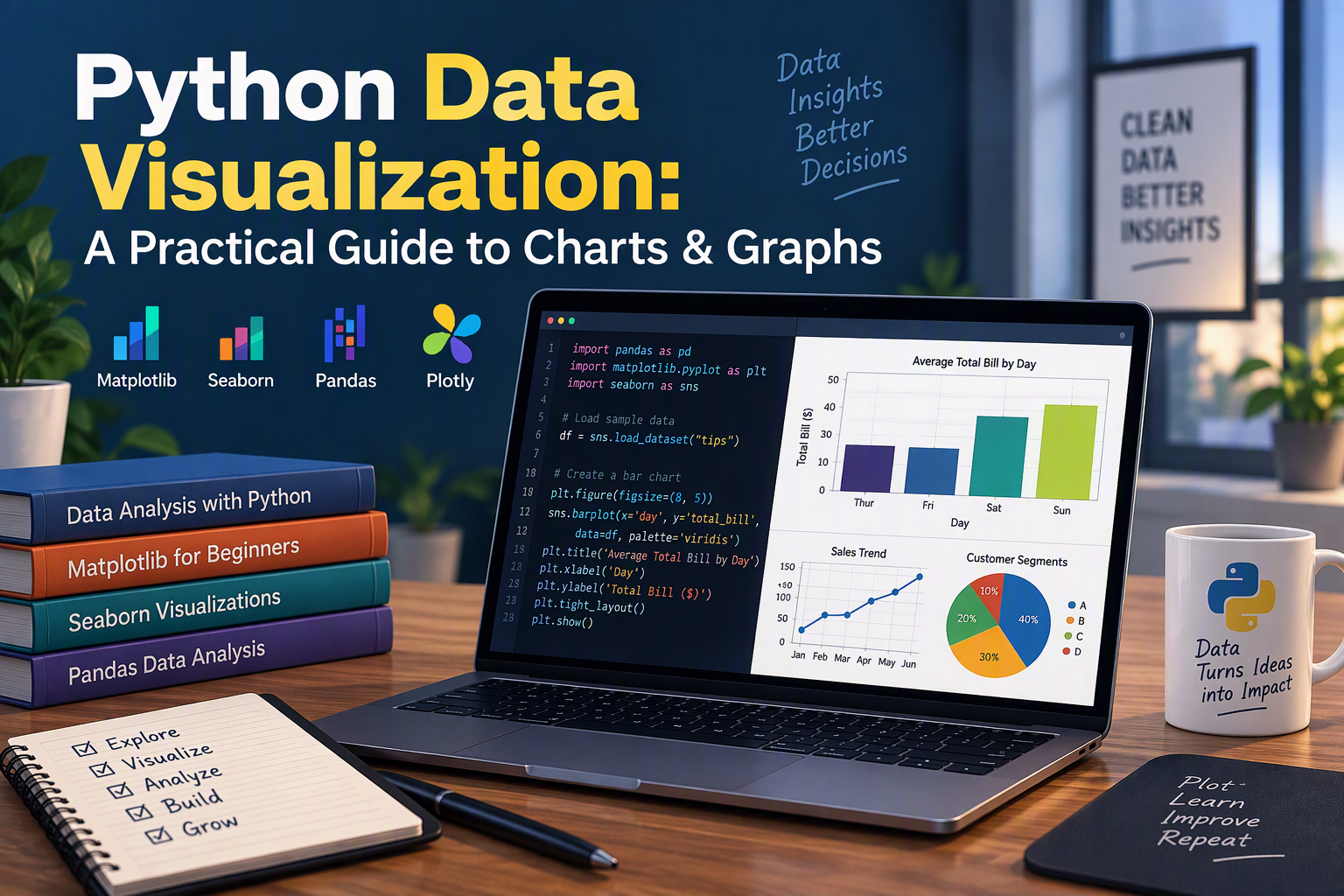
Python Data Visualization: A Practical Guide to Charts & Graphs
Build bar, pie, donut, line, scatter, gauge, and map charts in Python with Pandas, Matplotlib, Seaborn, and GeoPandas, with light and dark mode for each.
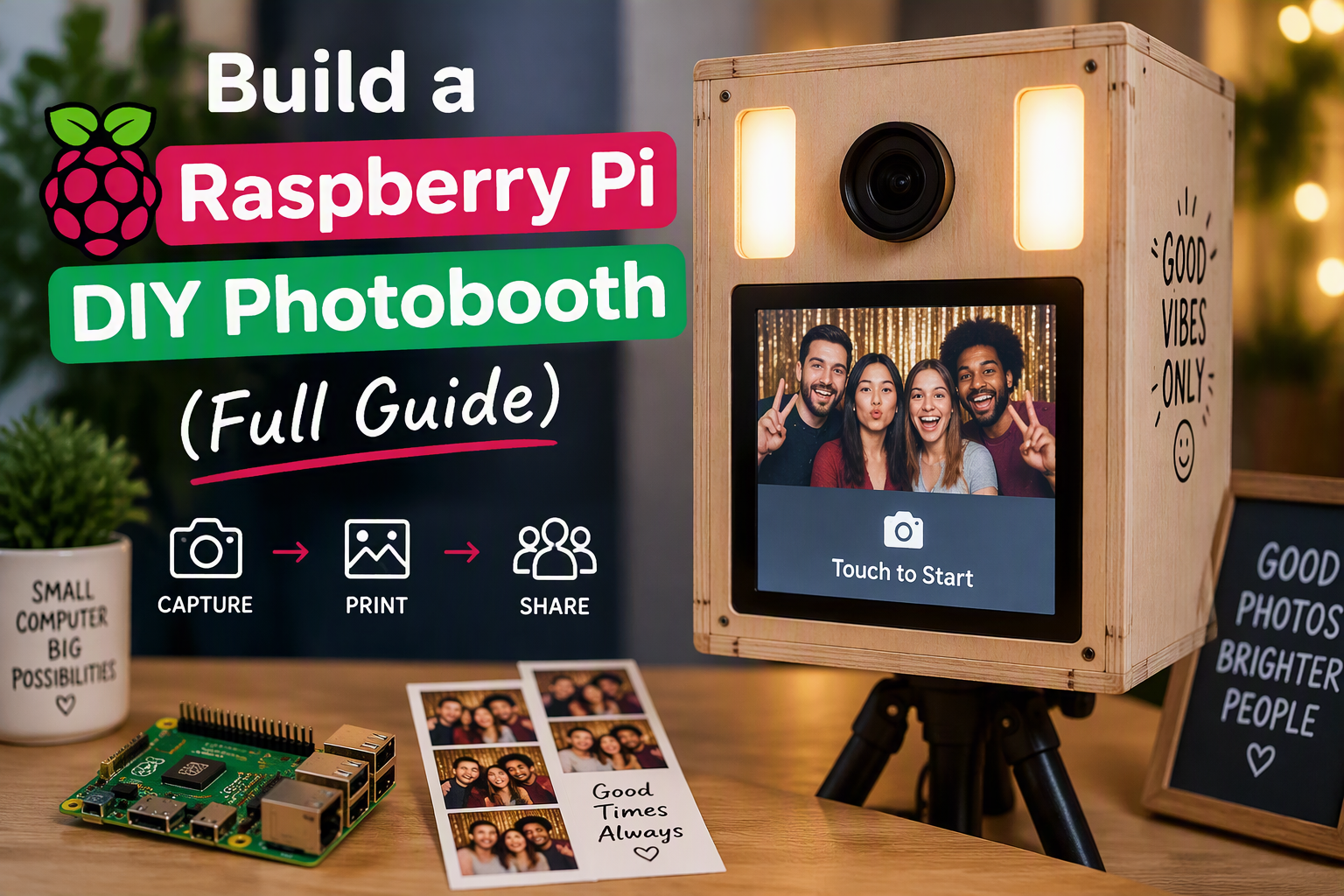
Build a Raspberry Pi DIY Photobooth (Full Guide)
Learn how to build a DIY Raspberry Pi photobooth with live preview, countdown capture, background removal, and event galleries.
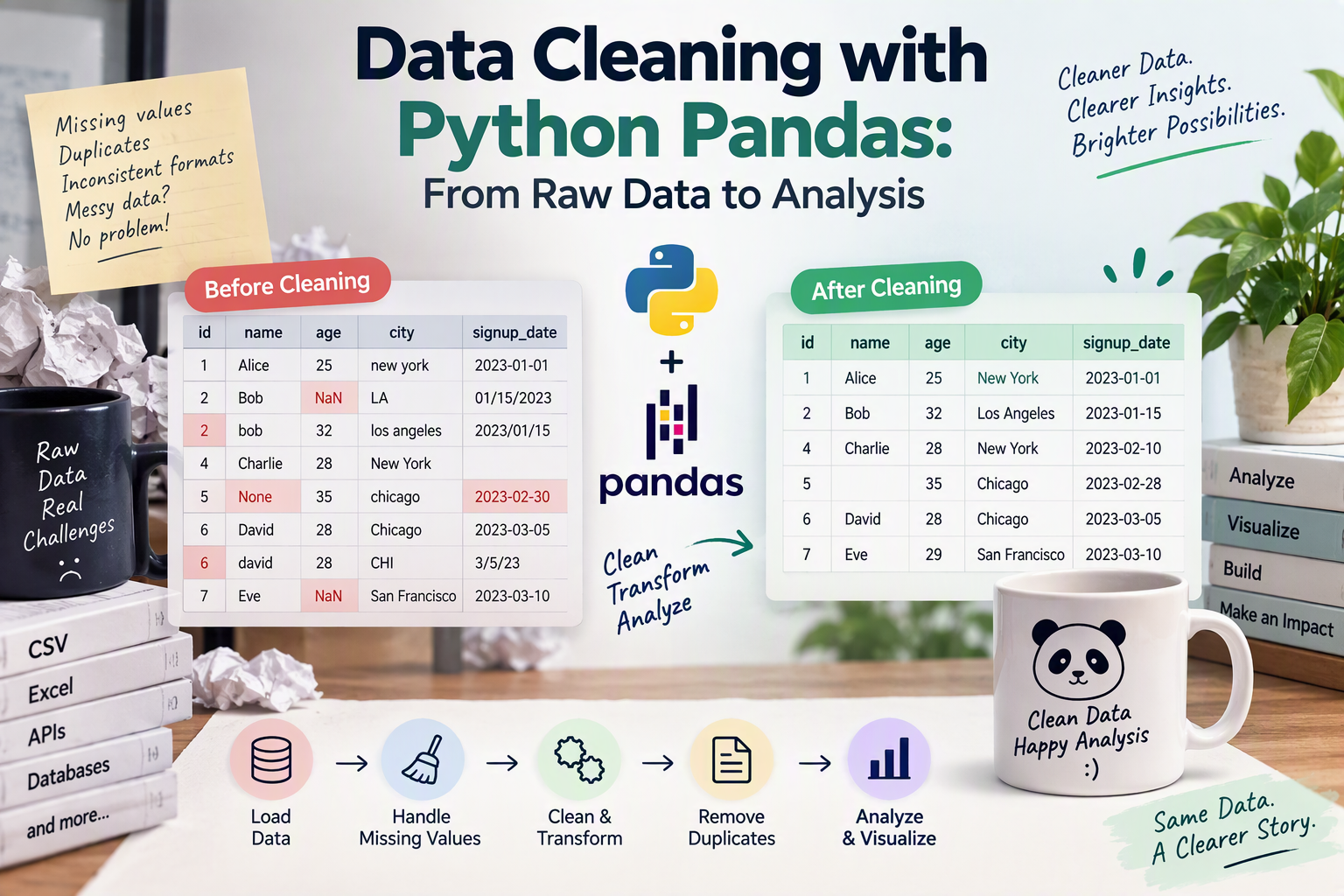
Data Cleaning with Python Pandas: From Raw Data to Analysis
A practical, hands-on Pandas guide: load a messy real-world dataset, clean text, prices, dates, duplicates, missing values, and outliers, then filter, group, pivot, merge, and export it — with real output at every step.
Python Virtual Environments: Setup Guide & Best Practices
Learn how to create and manage Python virtual environments with venv, plus setup steps for Windows, macOS, Linux, and a cheat sheet.
Python for Data Analysis: Accessing Your Data
Learn how to access data in Python for data analysis — from CSV and Excel files to SQL databases, APIs, and web scraping.

PyCon US 2026: A Guide to Python's Biggest Conference in Long Beach
Everything about PyCon US 2026 in Long Beach, California: the dates and schedule, keynote speakers, the first AI and Security tracks, the Spanish-language Charlas, tutorials, summits, sprints, ticket prices, and how to watch the recorded talks.
Python uv: A Faster Way to Manage Projects and Dependencies
Learn how to use Python uv to create projects, manage dependencies, and keep reproducible lockfiles with a fast, modern workflow.
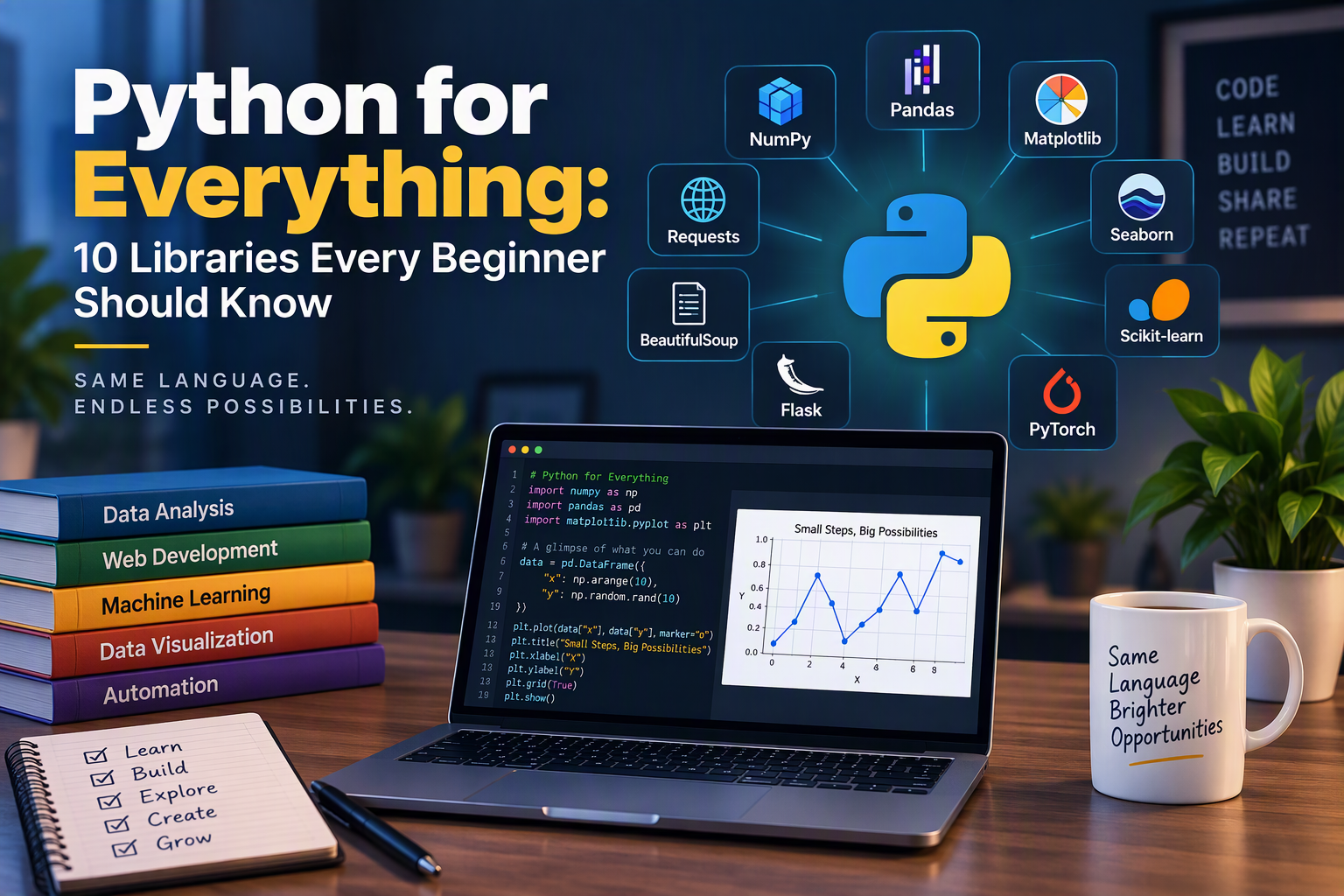
Python for Everything: 10 Libraries Every Beginner Should Know
A beginner-friendly tour of 10 popular Python libraries, from Pandas and Matplotlib to Flask, Django, and OpenCV, and what each one is best at.
Docker for Beginners: Your First Steps into Containers
New to containers? Learn Docker basics for beginners, then build a Flask and MySQL app with Docker Compose step by step.
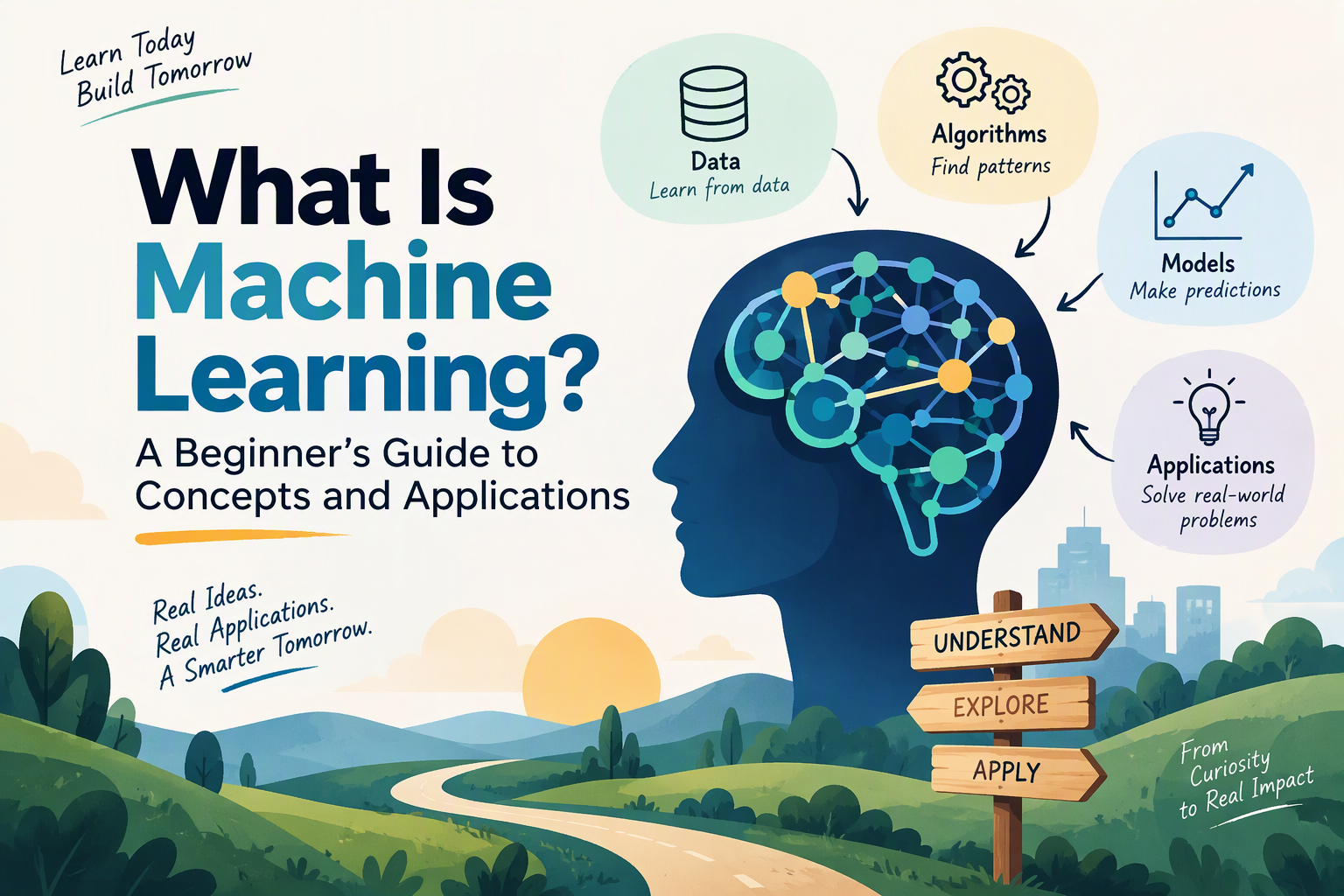
What Is Machine Learning? A Beginner's Guide to Concepts and Applications
Learn what machine learning is, how it works, the main types, key terms, and real-world examples, plus a simple roadmap for getting started.
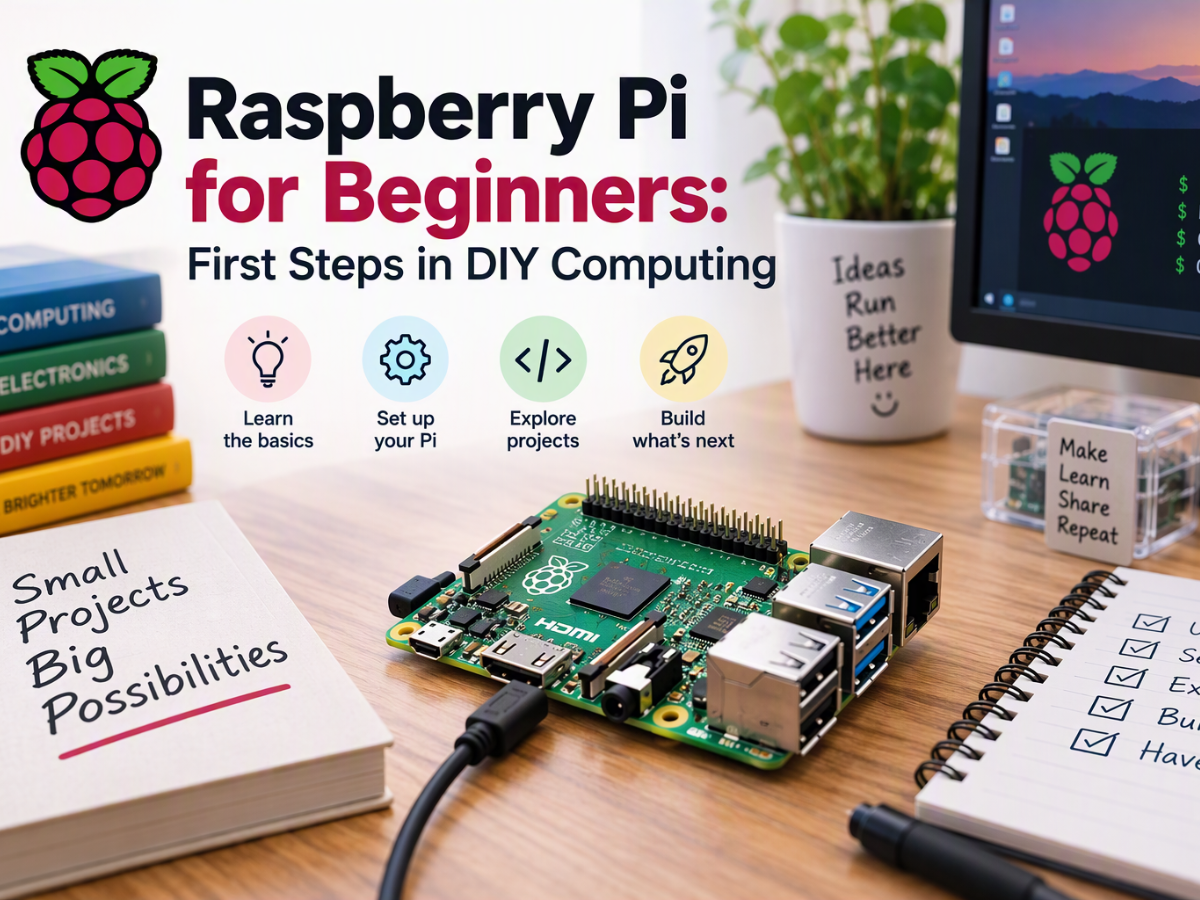
Raspberry Pi for Beginners: First Steps in DIY Computing
New to Raspberry Pi? Learn what it is, how to set it up, and beginner project ideas for your first DIY computing board.
The Importance of the .env File in Python Projects
Learn why .env files matter in Python projects — keeping API keys and secrets out of your code, with setup steps and best practices.
100 Days of Python: Day 011 Blackjack Game
Explore Day 011 of the 100 Days of Python challenge, a command-line Blackjack game with card scoring, dealer logic, and game statistics.
100 Days of Python: Day 010 Calculator
Explore Day 010 of the 100 Days of Python challenge, a calculator that uses functions, dictionaries, validation, and chained operations.
100 Days of Python: Day 009 Secret Auction
Explore Day 009 of the 100 Days of Python challenge, a secret auction program using dictionaries, loops, validation, and sorting.
100 Days of Python: Day 008 Caesar Cipher
Explore Day 008 of the 100 Days of Python challenge, a Caesar Cipher encoder and decoder using functions, parameters, and modular arithmetic.
100 Days of Python: Day 007 Dragon Ball Hangman
Explore Day 007 of the 100 Days of Python challenge, a Dragon Ball Hangman game using modules, loops, lists, and game-state tracking.
100 Days of Python: Day 006 Age Calculator
Explore Day 006 of the 100 Days of Python challenge, an age calculator using datetime, while loops, parsing, and date arithmetic.
100 Days of Python: Day 005 Number Guessing Game
Explore Day 005 of the 100 Days of Python challenge, a number guessing game using random values, while loops, and input validation.
100 Days of Python: Day 004 Password Generator
Explore Day 004 of the 100 Days of Python challenge, a random password generator using lists, loops, and shuffling.
100 Days of Python: Day 003 Rock Paper Scissors
Explore Day 003 of the 100 Days of Python challenge, a terminal Rock Paper Scissors game using random choices, lists, and conditionals.
100 Days of Python: Day 002 Pyramid Escape Room
Explore Day 002 of the 100 Days of Python challenge, an interactive Pyramid Escape Room built with conditional logic and nested decisions.
100 Days of Python: Day 001 Tip Calculator
Explore Day 001 of the 100 Days of Python challenge, a tip calculator that practices numeric input, percentages, and formatted output.
100 Days of Python: Day 000 Band Name Generator
Explore Day 000 of the 100 Days of Python challenge, a beginner Band Name Generator built with variables, user input, and string concatenation.
100 Days of Python Challenge: A Beginner's Guide
Learn how the 100 Days of Python challenge works, what projects it includes, and how daily practice can strengthen your Python skills.
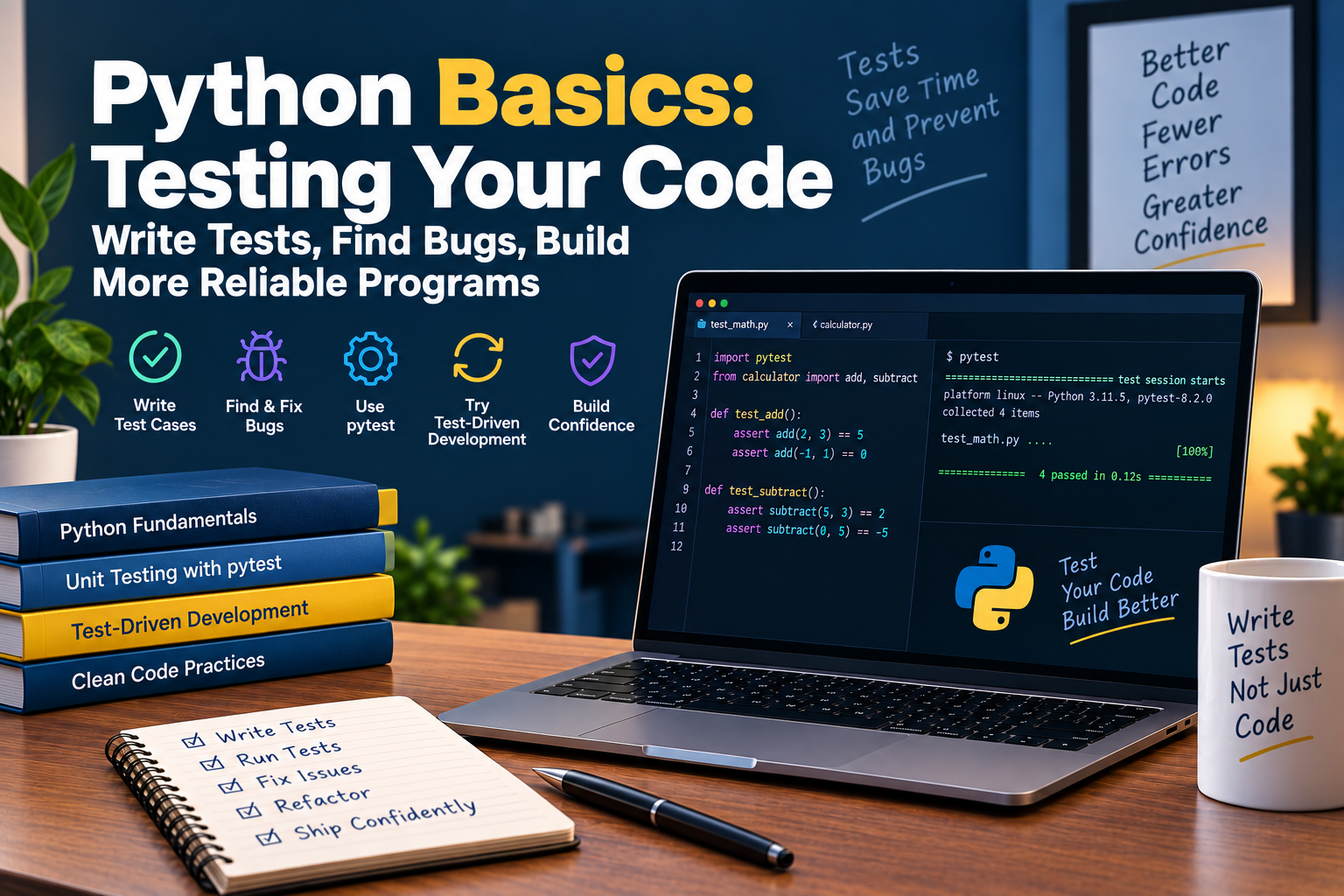
Python Basics: Testing Your Code
Part 9, the final post of the Python Basics series: learn how to test your Python code with pytest — writing your first test, reading failures, testing exceptions and decimals, parametrized tests, fixtures, temporary files, and good testing habits.
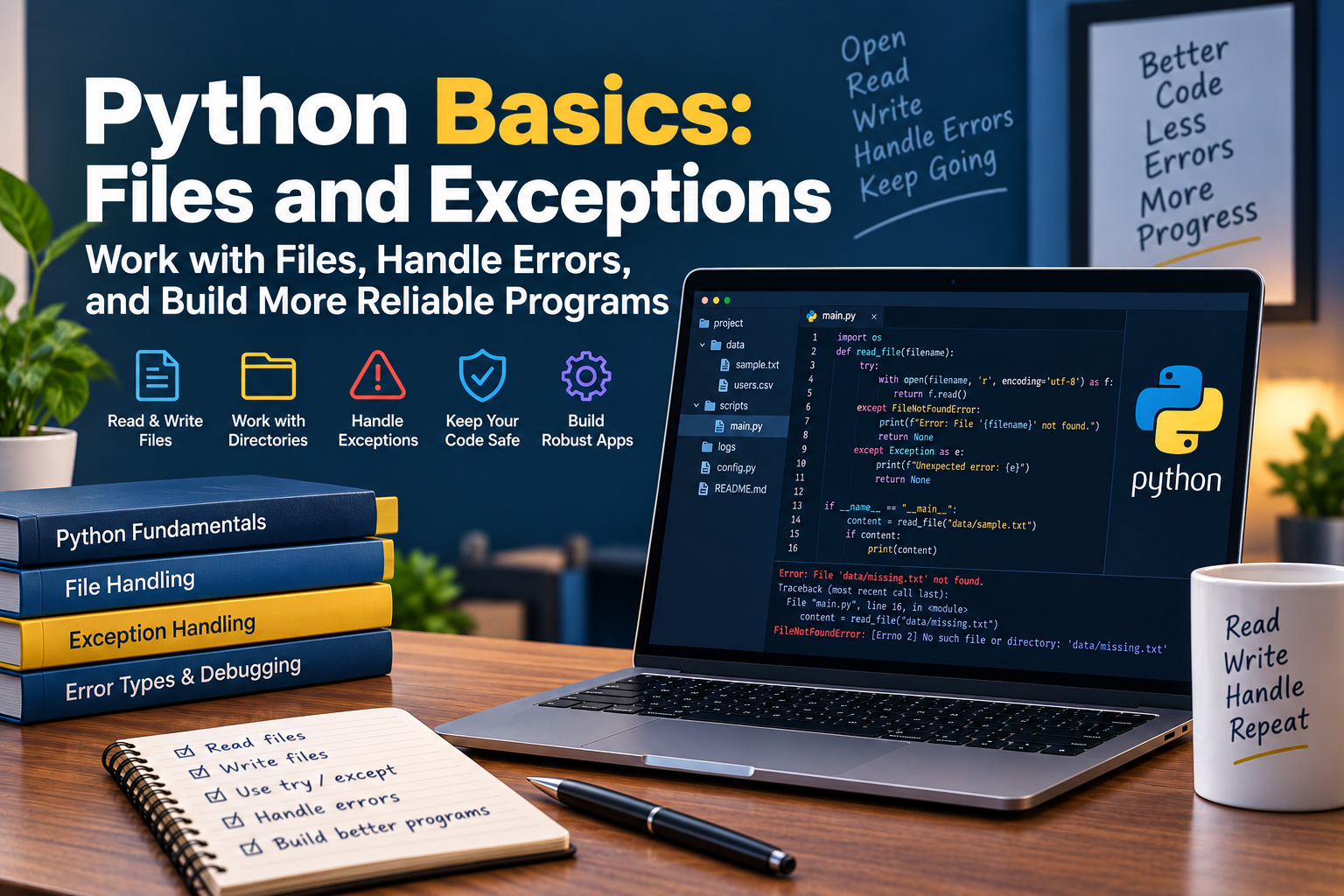
Python Basics: Files and Exceptions
Part 8 of the Python Basics series: learn how to read and write files in Python, work with CSV and JSON, and handle errors with try, except, else, and finally — so your programs save their data and keep running when something goes wrong.
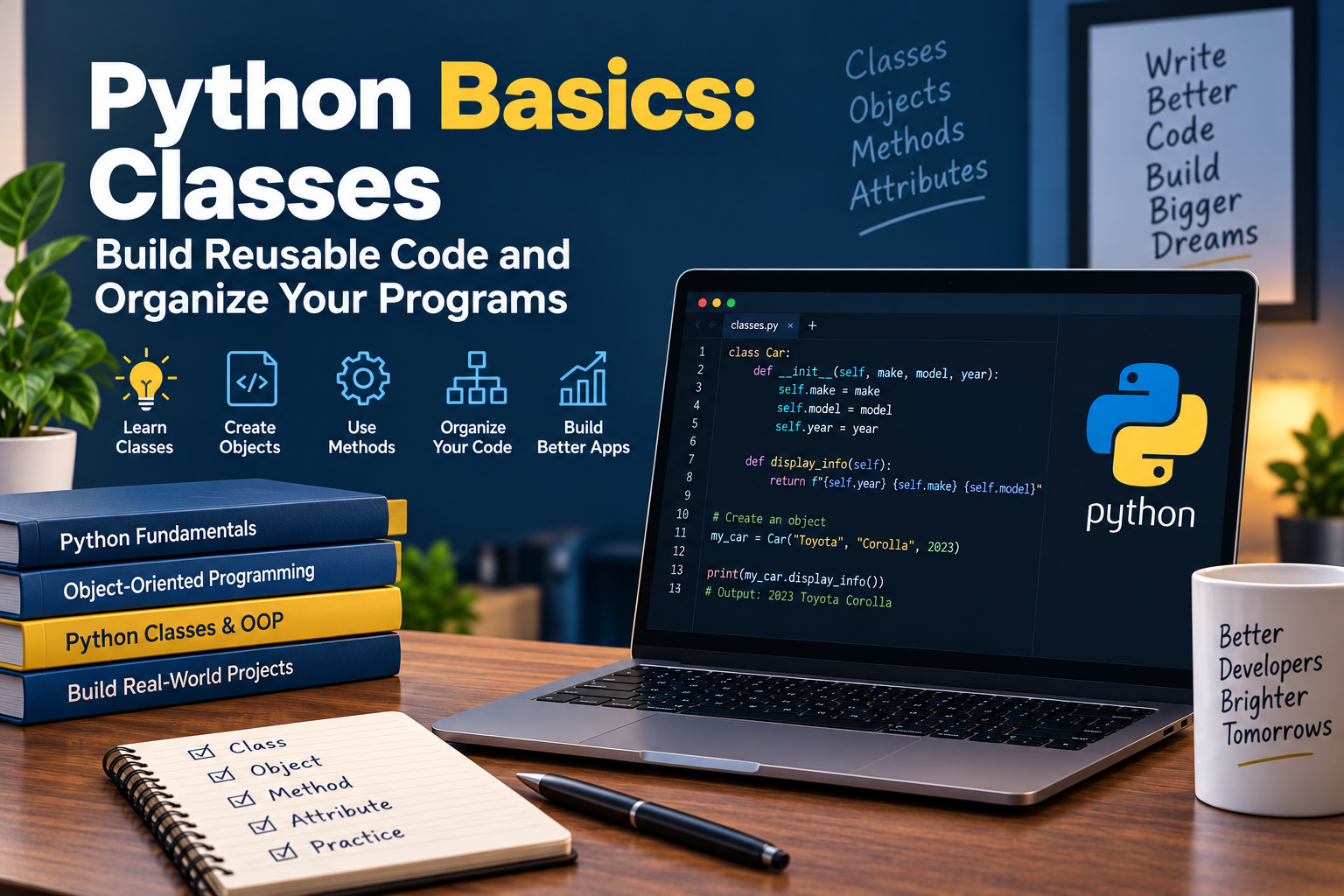
Python Basics: Classes
Part 7 of the Python Basics series: learn object-oriented programming in Python — defining classes, creating objects, the __init__ method and self, attributes and methods, __str__, class attributes, inheritance, composition, and dataclasses.
Python Basics: Functions
Part 6 of the Python Basics series: learn how to write Python functions — defining and calling them, parameters and arguments, default values, return values, scope, *args and **kwargs, lambda functions, and organizing your code into modules.
Python Basics: User Input and While Loops
Part 5 of the Python Basics series: learn how to get user input in Python with input(), convert and validate it, and use while loops to repeat code, keep asking until the answer is valid, stop with break, skip with continue, and avoid infinite loops.
Python Basics: If Statement
Part 4 of the Python Basics series: learn how Python's if statement works — if, elif, and else, comparison and logical operators, truthy values, nested conditions, one-line conditional expressions, match statements, and the mistakes beginners make most often.
Python Basics: Lists and Dictionaries
Part 3 of the Python Basics series: master Python lists and dictionaries — adding, removing, sorting, and searching items, looping with enumerate, list and dictionary comprehensions, nested data, and working with lists of dictionaries like real JSON data.
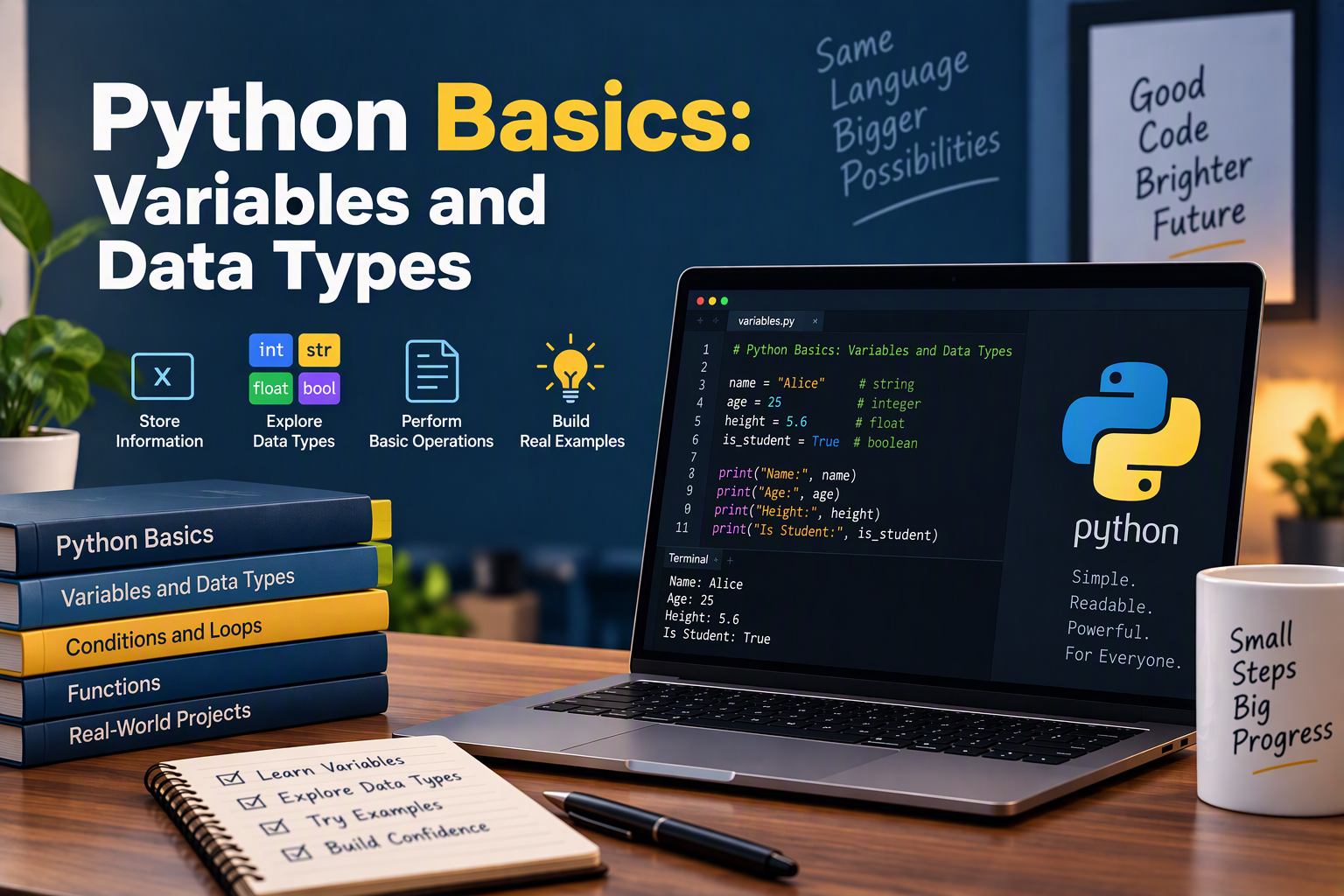
Python Basics: Variables and Data Types
Part 2 of the Python Basics series: learn how Python variables work, how to name them, and how to use strings, numbers, booleans, None, lists, tuples, dictionaries, and sets — with clear examples and common beginner mistakes.
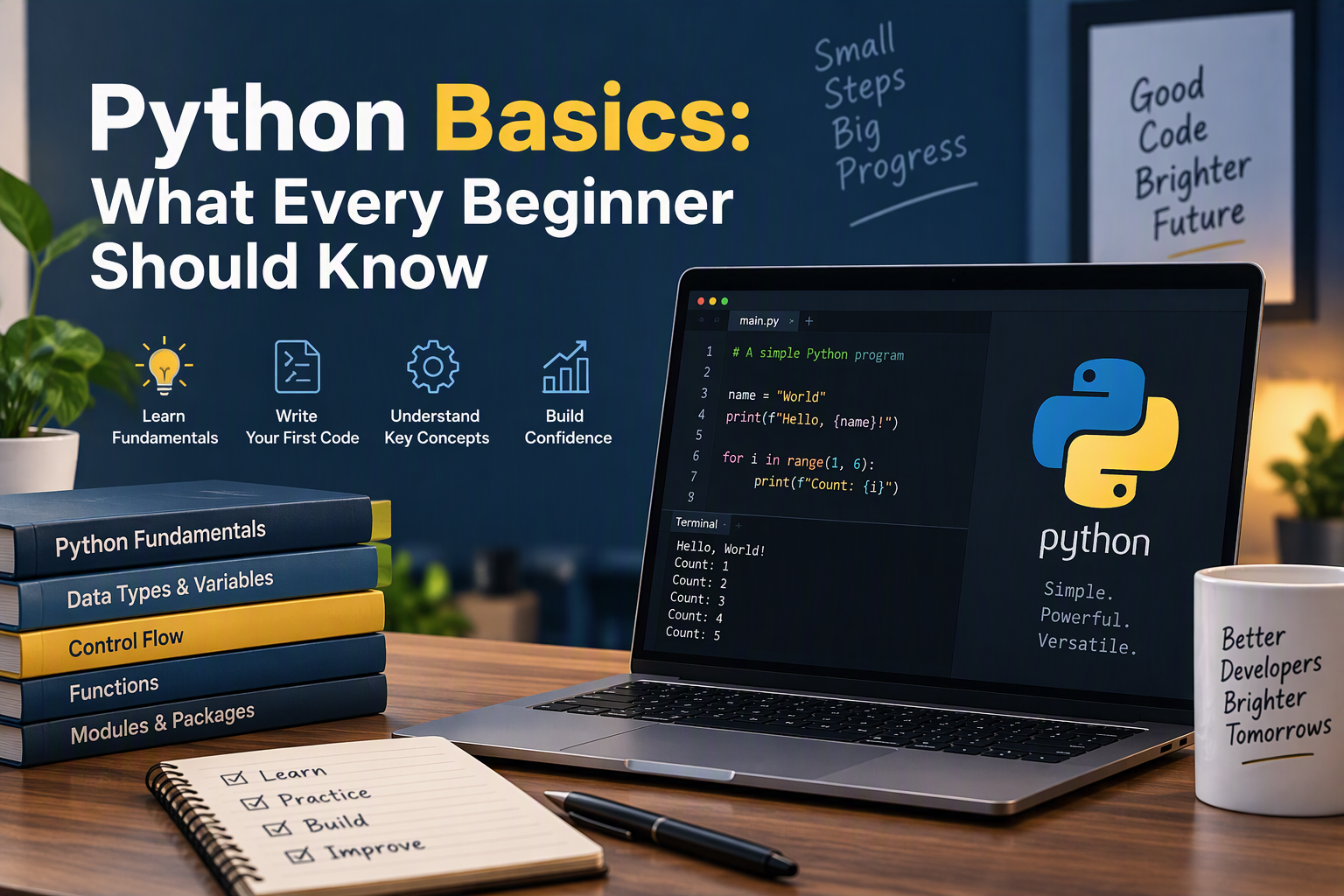
Python Basics: What Every Beginner Should Know
New to Python? Learn the core Python basics every beginner should know — variables, data types, loops, functions, and more.